
The definition of professional attire has undergone a massive transformation over the last decade. Gone are the days when a stiff suit and tie were the mandatory uniform for every office inhabitant. Today, the dominant dress code is business casual.
While the term sounds relaxed, it often creates more confusion than a traditional formal dress code. Does “casual” mean jeans? Is a polo shirt “business” enough? To help you navigate this sartorial middle ground, we’ve broken down everything you need to know to look sharp, professional, and approachable.
What Exactly Is Business Casual?
At its core, business casual is a bridge between traditional business wear (suits and ties) and casual wear (t-shirts and hoodies). It is intended to project a professional image while prioritizing comfort and individual style.
The challenge is that “business casual” can look different depending on your industry and location. A tech startup in Silicon Valley might consider a clean pair of dark denim and a sweater to be business casual, while a law firm in London might expect chinos and a blazer.

The Golden Rule
When in doubt, it is always better to be slightly overdressed than underdressed. You can always take off a blazer or roll up your sleeves, but you can’t make a graphic tee look like a button-down once you’ve arrived at the meeting.
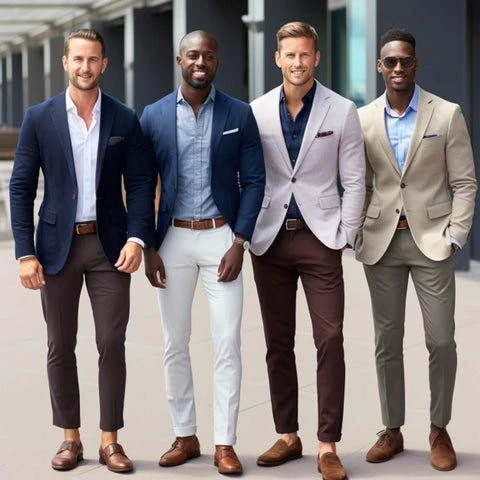
Key Components for Men
For men, the goal is a polished look that doesn’t feel restrictive.
- Tops: Stick to button-down shirts, oxfords, or high-quality polo shirts. In colder months, fine-knit sweaters or cardigans layered over a collared shirt are excellent choices.
- Bottoms: Chinos, dress slacks, or corduroy pants are the standard. While some modern offices allow dark-wash denim, ensure it is free of holes, fraying, or heavy fading.
- Footwear: Leather loafers, brogues, Chelsea boots, or even clean, minimalist leather sneakers (if the office culture permits) work well. Always ensure your shoes are clean and scuff-free.
- Outerwear: A well-fitted navy blazer is the “secret weapon” of business casual. It instantly elevates any outfit.
Key Components for Women
Women have a broader range of options, offering flexibility but requiring careful curation.
- Tops: Blouses, shells, high-quality knit tops, and turtlenecks are staples. Avoid anything too sheer, low-cut, or overly trendy.
- Bottoms: Tailored trousers, pencil skirts (knee-length or longer), and midi skirts are classic. Professional-looking dresses (sheath or A-line) are also highly effective.
- Layering: Blazers, structured cardigans, and trench coats add a layer of sophistication to any ensemble.
- Footwear: Pointed-toe flats, loafers, block heels, or refined boots. Comfort is key, but the style should remain structured.
Common Business Casual Mistakes to Avoid
Even with the best intentions, it’s easy to slip too far into the “casual” side of the spectrum. Avoid these common pitfalls:
- Too Much Athleisure: Leggings, hoodies, and gym sneakers belong at the fitness center, not the conference table.
- Wrinkled Clothing: No matter how expensive your clothes are, if they are wrinkled, you will look unpolished. Invest in a good steamer or iron.
- Ill-Fitting Garments: Baggy clothes look sloppy, while overly tight clothes can appear unprofessional. Tailoring is your best friend.
- Distressing and Holes: Even if distressed jeans are in style, they rarely fit a business casual environment.
- Neglected Grooming: Your outfit is only half the battle. Ensure your hair, nails, and general grooming are up to par.
Seasonal Adjustments
- Spring/Summer: Focus on breathable fabrics like linen blends, cotton, and seersucker. Light colors like tan, light gray, and pastel blues help keep you cool while maintaining a professional palette.
- Fall/Winter: This is the season for textures. Incorporate wool, tweed, and flannel. Layering becomes essential—think a crisp shirt under a merino wool V-neck or a structured overcoat over your blazer.
The “Friday” Factor
Many companies offer a “Casual Friday” where the rules loosen even further. However, remember that you are still in a business premises. If you choose to wear jeans on Friday, pair them with a structured top or a blazer to maintain your professional authority.
Building a Capsule Wardrobe
You don’t need a massive closet to master business casual. Focus on quality over quantity. By investing in neutral colors (navy, gray, black, white, and olive), you can mix and match almost every piece in your wardrobe, creating dozens of outfits from just a few key items.
Conclusion
Business casual is about finding the sweet spot between looking like a leader and feeling like yourself. It shows respect for your colleagues and clients while allowing for the practicalities of a modern workday. By focusing on fit, fabric, and a few timeless staples, you can navigate any professional setting with confidence.