

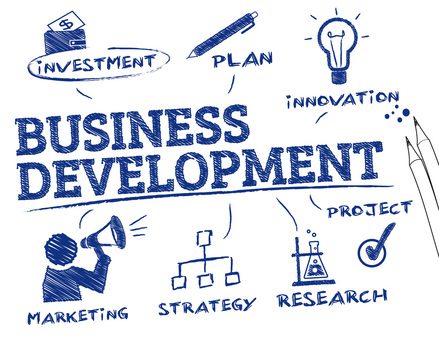
In the modern corporate landscape, the term business development (BD) is often used as a buzzword, frequently interchanged with “sales” or “marketing.” However, actual business development is a much broader, more strategic discipline. At its core, business development is the process of creating long-term value for an organization from customers, markets, and relationships.
While a sales representative focuses on closing a specific deal, a business development professional focuses on the ecosystem that enables those deals. It is about identifying the right doors to knock on and building the hinges that allow those doors to swing open for years to come.
The Three Pillars of Value Creation
To understand business development, one must look at the three primary sources of value it taps into:
1. Customers
BD isn’t just about finding any customer; it’s about finding the right customer. This involves deep market research to identify underserved segments or high-value niches. A BD professional asks: “Who is not using our product yet, and why? How can we shift our value proposition to meet their unique needs?”

2. Markets
Expanding into new markets—whether geographically or demographically—is a hallmark of successful BD. This might involve localizing a product for a foreign country or finding a way to sell a B2B software solution to a government agency for the first time. It requires an understanding of regulatory environments, local competition, and cultural nuances.
3. Relationships
This is the most critical pillar. Business development thrives on strategic partnerships. Whether it’s a referral agreement, a co-branding initiative, or a distribution partnership, BD is about finding “win-win” scenarios where two entities can achieve more together than they could alone.
Business Development vs. Sales: Understanding the Nuance
It is a common misconception that BD is just “senior-level sales.” While both departments aim to increase revenue, their methodologies and timelines differ significantly.
| Feature | Business Development | Sales |
| Focus | Long-term growth and partnerships | Short-term revenue and quotas |
| Goal | Building the pipeline and market presence | Closing individual transactions |
| Activity | Networking, strategic planning, lead qualifying | Pitching, negotiating, overcoming objections |
| Outcome | Brand equity and new opportunities | Revenue and market share |
In short, Sales harvests the crop, while Business Development clears the land, tests the soil, and plants the seeds.
Strategic Steps for Effective Business Development
To build a robust BD engine, organizations must move beyond “gut feeling” and adopt a structured approach.
1. Market Analysis and Intelligence
Before reaching out to prospects, you must understand the playing field. This involves SWOT analyses (Strengths, Weaknesses, Opportunities, Threats) and staying ahead of industry trends. Data-driven BD ensures that you aren’t chasing every “shiny object” but are focusing on opportunities with the highest ROI.
2. Building a Network of Influence
Networking is the lifeblood of BD. However, it isn’t just about collecting business cards. It’s about building a reputation as a thought leader and a problem solver. Successful BD pros attend industry conferences, participate in webinars, and leverage platforms like LinkedIn to provide value before they ever ask for a meeting.
3. Cultivating Strategic Partnerships
Strategic alliances can provide a shortcut to market dominance. For example, a small software startup might partner with a large hardware manufacturer to have its app pre-installed on devices. This gives the startup instant scale and the manufacturer a more valuable product.
4. Continuous Feedback Loops
Business development sits at the intersection of the product team and the market. A BD professional should funnel insights back to the product developers. If a potential partner says, “We love your tool, but it lacks [Feature X],” that is vital intelligence that can pivot the company’s entire roadmap.
The Skills of a Modern BD Professional
To excel in business development today, one needs a hybrid skill set:
- Empathy and Listening: Understanding a partner’s pain points is more important than talking about your own features.
- Financial Literacy: You must understand the “unit economics” of a deal to ensure a partnership is profitable for both sides.
- Project Management: Strategic deals often involve multiple stakeholders across legal, finance, and engineering. A BD pro must be the “glue” that keeps the project moving.
- Resilience: Because BD deals are long-term, you will face more “no’s” and “not yet’s” than in almost any other role. Persistence is mandatory.
Conclusion: The Future of BD
In an era of automation and AI, the human element of business development is more valuable than ever. While tools can identify leads and automate emails, they cannot build trust or envision a creative partnership that doesn’t yet exist.
Business development is the ultimate “infinite game.” It is not about winning a single point; it is about ensuring the game continues to grow and evolve. By focusing on relationships and long-term value, companies can move beyond survival and enter a phase of sustainable, compounding growth.